






Which Floors Handle Bathroom Water Best?
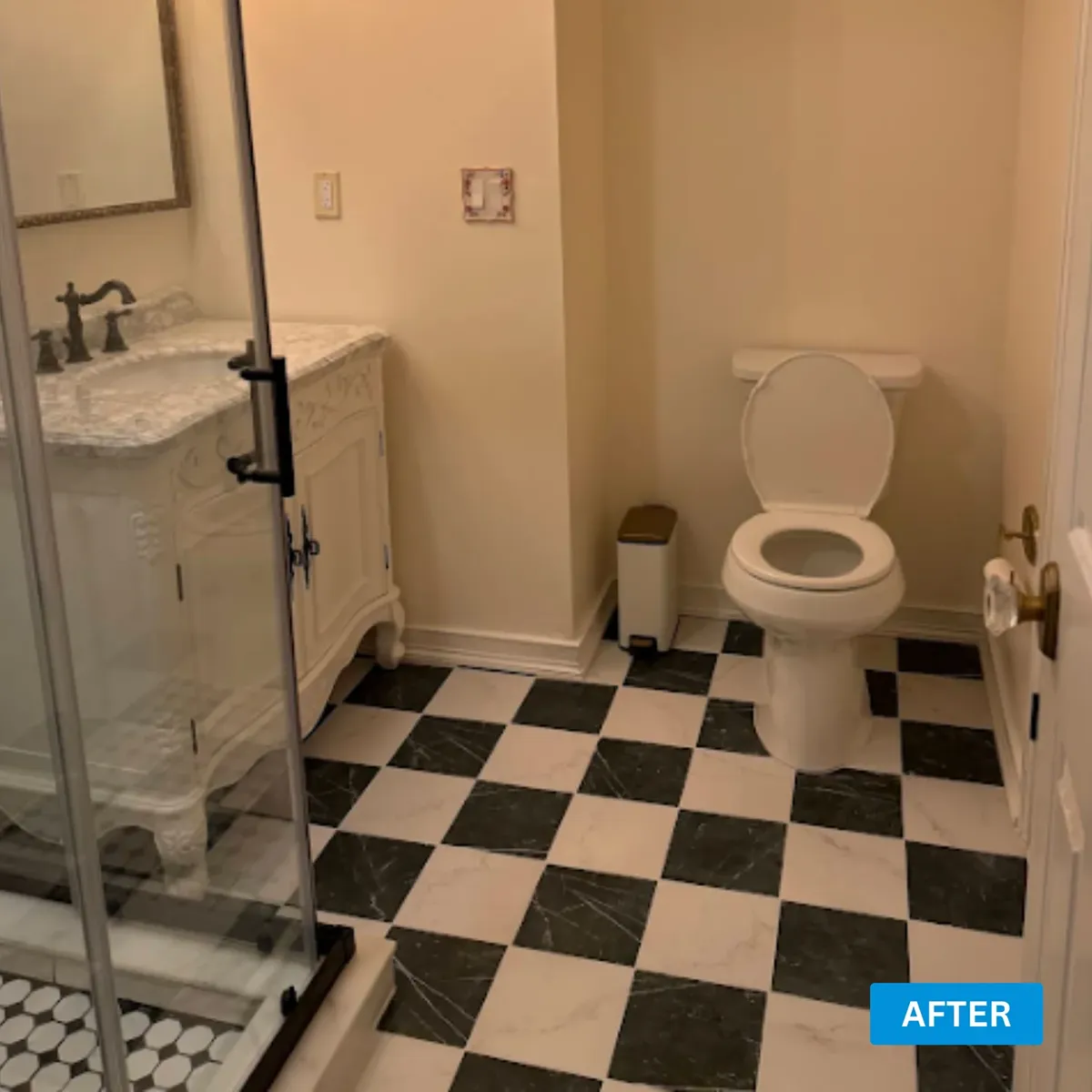
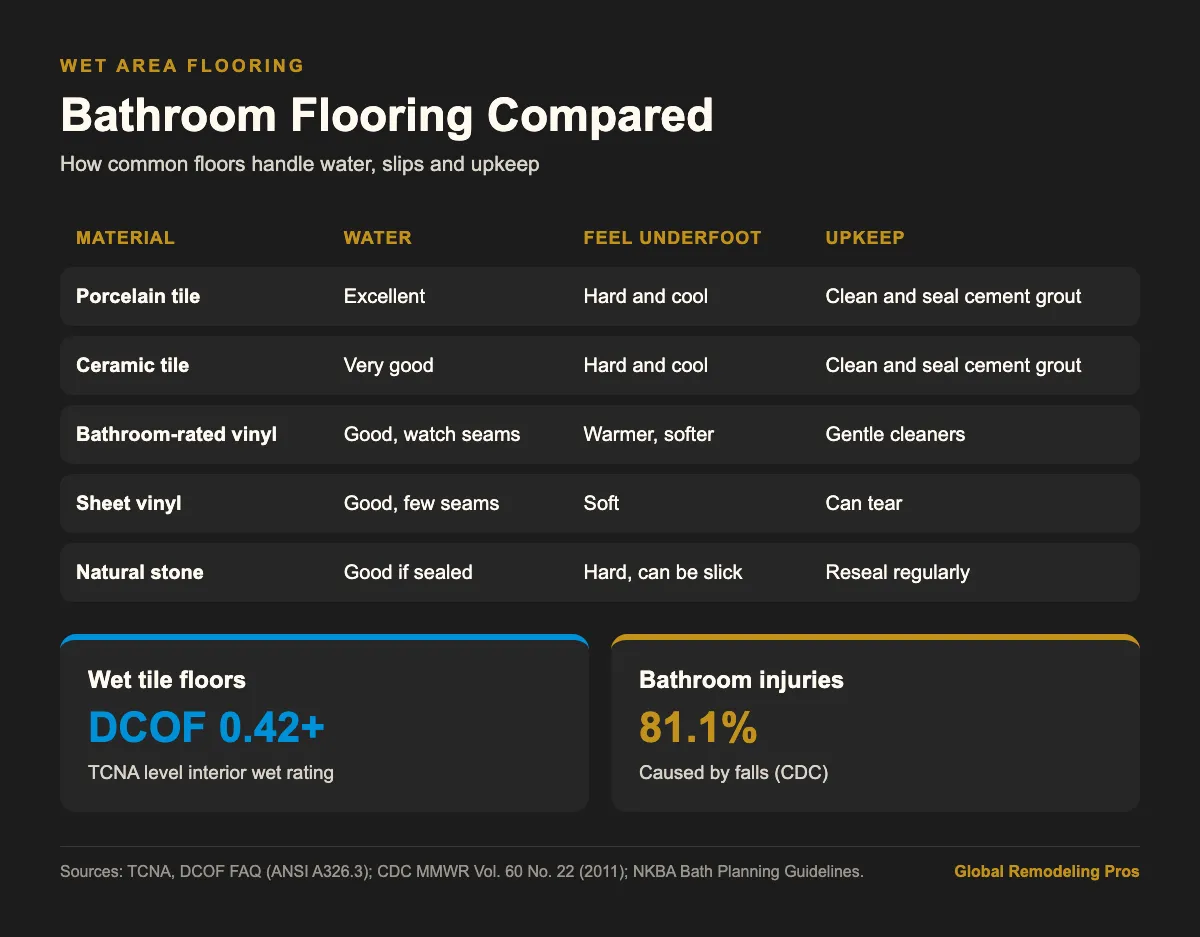
Porcelain tile is the best overall bathroom floor for wet areas, with ceramic tile and bathroom-rated vinyl close behind. Each resists water well, but they differ in feel, slip safety and upkeep.
The top surface is only half the story. Water that gets past the floor finish can still reach the subfloor, so what sits underneath matters just as much.
Below we compare the main options, explain waterproof finish versus waterproof assembly, and help you match a floor to your household. See our bathroom flooring page for installation.
Tile vs. Bathroom-Rated Resilient Flooring
Porcelain tile
Porcelain is dense and absorbs very little water. It resists scratches and stains and comes in looks from stone to wood. It feels hard and cold without radiant heat.
Ceramic tile
Ceramic is a lower cost tile that works well on most bathroom floors. Choose a tile rated for floors. It is a bit less dense than porcelain.
Luxury vinyl plank and tile
Rigid vinyl is warmer and softer underfoot than tile and is quick to install. Pick a product the maker rates for bathrooms. Seams and edges are where water can sneak through.
Sheet vinyl
Sheet vinyl has few or no seams, so it handles splashes well. It costs less but can look less upscale and can tear.
Natural stone
Marble and slate look great but need sealing. Polished stone can be slippery when wet and stains more easily.
Heated floors work under most tile and many vinyl products. They take the chill off tile and help the floor dry faster after a shower. Check that the flooring you pick is approved for use with floor heat.
Budget also plays a part. Sheet vinyl and ceramic tile usually cost the least to buy. Porcelain and bathroom-rated vinyl sit in the middle. Natural stone usually costs the most and needs the most care over time.
Wood-look tile is a popular middle ground. It gives the warm look of wood planks with the water resistance of porcelain.
Waterproof Finish vs. Waterproof Assembly
A waterproof floor finish means the top layer does not soak up water. A waterproof assembly means the whole floor system keeps water out of the structure. Those are not the same thing.
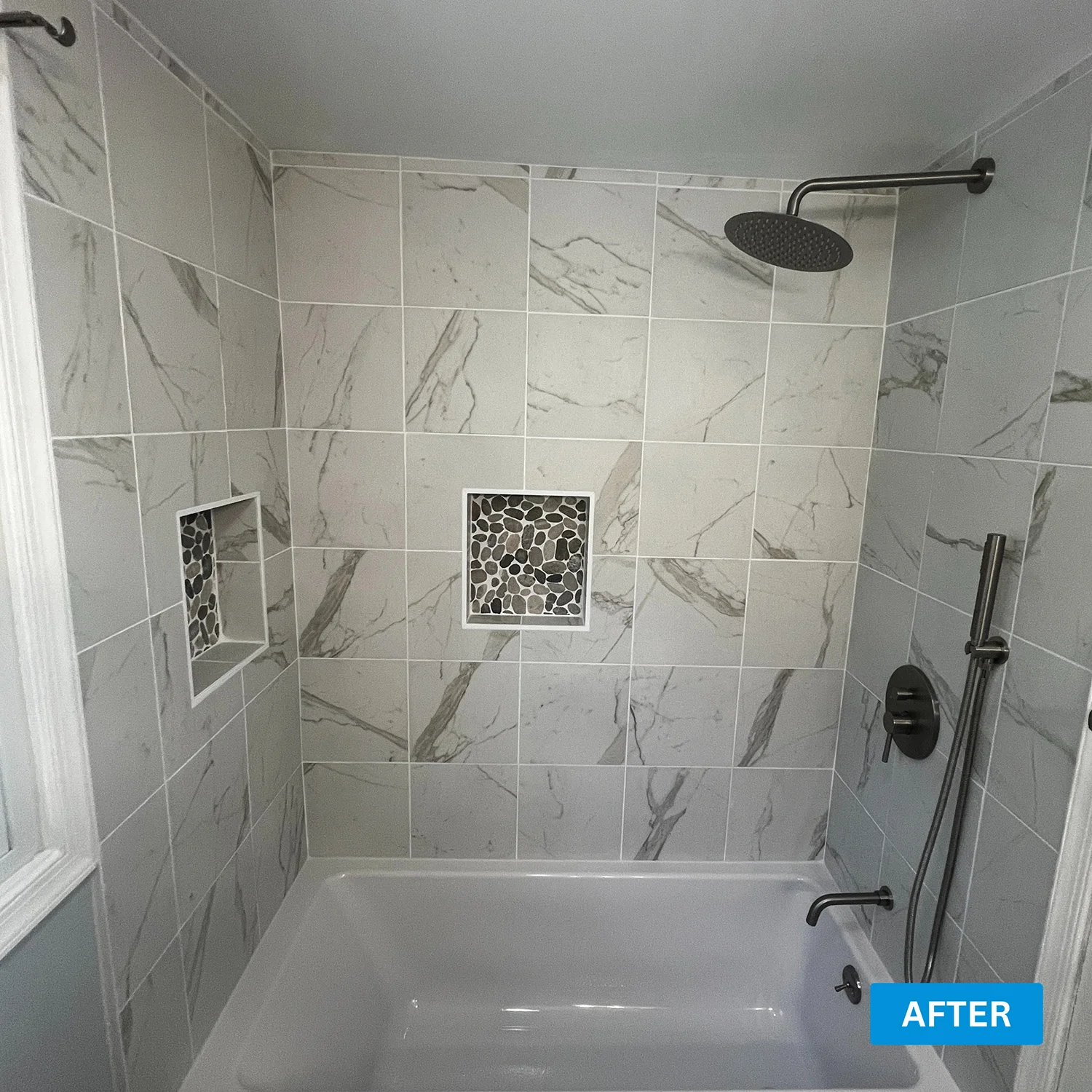
Tile itself sheds water, but grout lines and edges can let water through. Vinyl planks resist water, but water can slip through seams and around the tub or toilet. Either way, the layers below need to handle the moisture that gets past.
What a good assembly includes
A solid subfloor, the right underlayment or backer, sealed edges at the tub and walls, and caulk around the toilet base. In showers and curbless entries, a waterproof membrane under the tile is the real barrier.
Moisture control protects the whole room. The EPA advises drying water-damaged areas within 24 to 48 hours to prevent mold growth. A floor system that lets water sit underneath cannot do that.
Toilets and tubs are the weak points. Water from a leaking wax seal or a splash at the tub edge can sit where you cannot see it. Sealing those edges is part of doing the floor right.
Slip Resistance, Upkeep and Where Floors Meet
Wet bathroom floors cause falls. A CDC study of bathroom injuries found falls caused 81.1 percent of the nonfatal bathroom injuries treated in emergency rooms among people 15 and older.
For tile, look at the slip rating. The TCNA notes a wet DCOF of 0.42 or more for level interior floors that get walked on wet. It also warns that the number is not the only factor. Matte and textured finishes grip better than polished ones. Small mosaic tile on shower floors adds grip through extra grout lines.
Upkeep
Tile needs grout cleaning and, for cement grout, sealing. Vinyl needs gentle cleaners and care around seams. Stone needs regular resealing.
Where floors meet
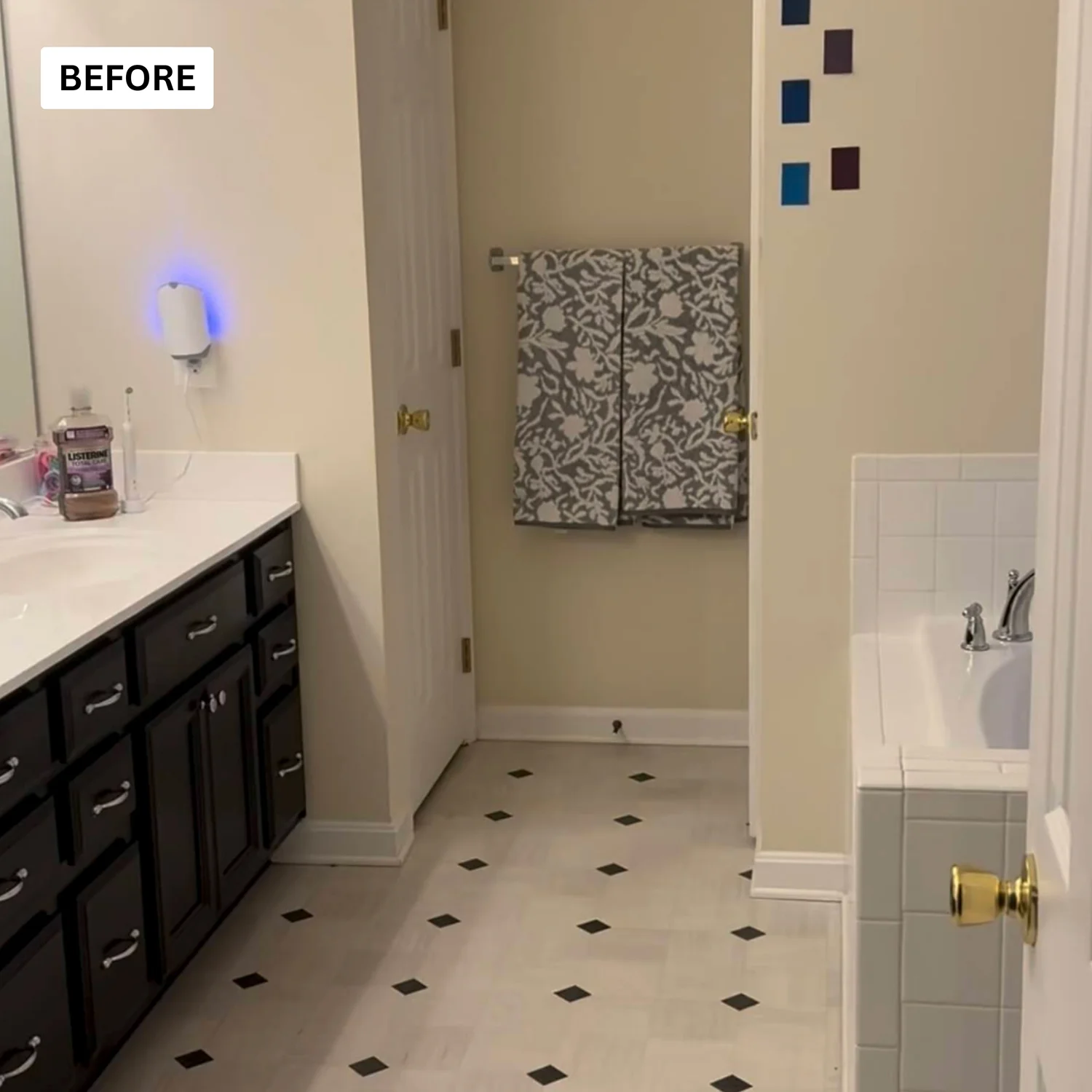
Where the bathroom floor meets the hallway, heights can differ. A threshold or reducer strip covers the gap and lowers the trip risk.
Global Remodeling Pros is a family owned remodeler founded in 2017, with more than 5,000 completed projects across Maryland and the DMV. We install tile and other bathroom floors as part of full and partial remodels. Every project is backed by our lifetime labor guarantee.
Color and grout choice affect upkeep too. Very light grout shows dirt quickly on a floor. A mid-tone grout hides everyday wear better and looks clean longer.
Radiant heat also helps with safety. A warm floor dries faster, so puddles do not sit as long after a bath.
How to Choose Flooring for Your Household
Start with who uses the bathroom. A kids’ bath with daily splashes does well with porcelain tile or bathroom-rated vinyl. A primary bath for two adults can handle stone if you are willing to seal it.
Older adults or anyone unsteady on their feet should get a matte, slip-resistant floor. Add good lighting and a low shower threshold for the safest setup.
If you are also changing the shower, compare acrylic vs. tile shower walls so the materials work together. Weighing a curbless shower? Read walk-in shower vs. tub. To budget the whole room, see what a full bathroom remodel costs.
Whatever you choose, ask your installer how they handle the edges, seams and subfloor. That answer tells you more than the product label.
Think about how long you will stay, too. Tile can last for decades if the floor under it is sound. Vinyl is quicker to replace later if your style changes.
Bring a sample home before you commit. See it in your own bathroom light, wet it, and walk on it in socks. That quick test tells you a lot about color and grip.
Wet Area Bathroom Flooring Questions
Is vinyl or tile better for a bathroom floor?
Tile lasts longer and handles standing water better. Bathroom-rated vinyl is warmer, softer and often costs less. Both work when the seams and edges are sealed well.
What is the most slip-resistant bathroom flooring?
Textured or matte porcelain tile and small mosaic tile offer good grip. Check the product’s wet DCOF rating. Avoid polished stone in wet spots.
Can you put laminate in a bathroom?
Standard laminate has a wood-based core that can swell when wet, so it is a poor fit for most bathrooms. Global Remodeling Pros helps homeowners in Columbia, Maryland pick flooring built for wet rooms.
Get a Bathroom Floor Built for Water
Global Remodeling Pros installs bathroom flooring in Columbia, Maryland and nearby towns. Call for a detailed proposal within 24 hours.
Call 443-363-1720
Related reading: 7 Signs Your Bathroom Needs a Renovation and How to Choose the Right Bathroom Vanity Size.