


The One Number That Decides Which Toilet Fits
A toilet rough-in is the distance from the finished wall to the center of the toilet drain. In most homes it is 12 inches, and that number decides which toilets will sit in the spot you have.
Measure it before you buy anything. Below is how to take the reading in two minutes. Then what 10, 12 and 14 inches mean, and what to do when the toilet you want does not match your bathroom plumbing.
What Is a Toilet Rough-In?
It is the gap the plumber left for the toilet. You measure it from the finished wall to the center of the drain in the floor. That gap sets how far back the bowl can sit.
Why the number exists
The drain is set in the floor long before the toilet shows up. Walls, tile and trim go on after it. The toilet then has to match the hole that is already there.
Toilet makers build to that gap. Pick the wrong one and the bolts will not line up with the flange, so the toilet never sits flat.
The three sizes you will see
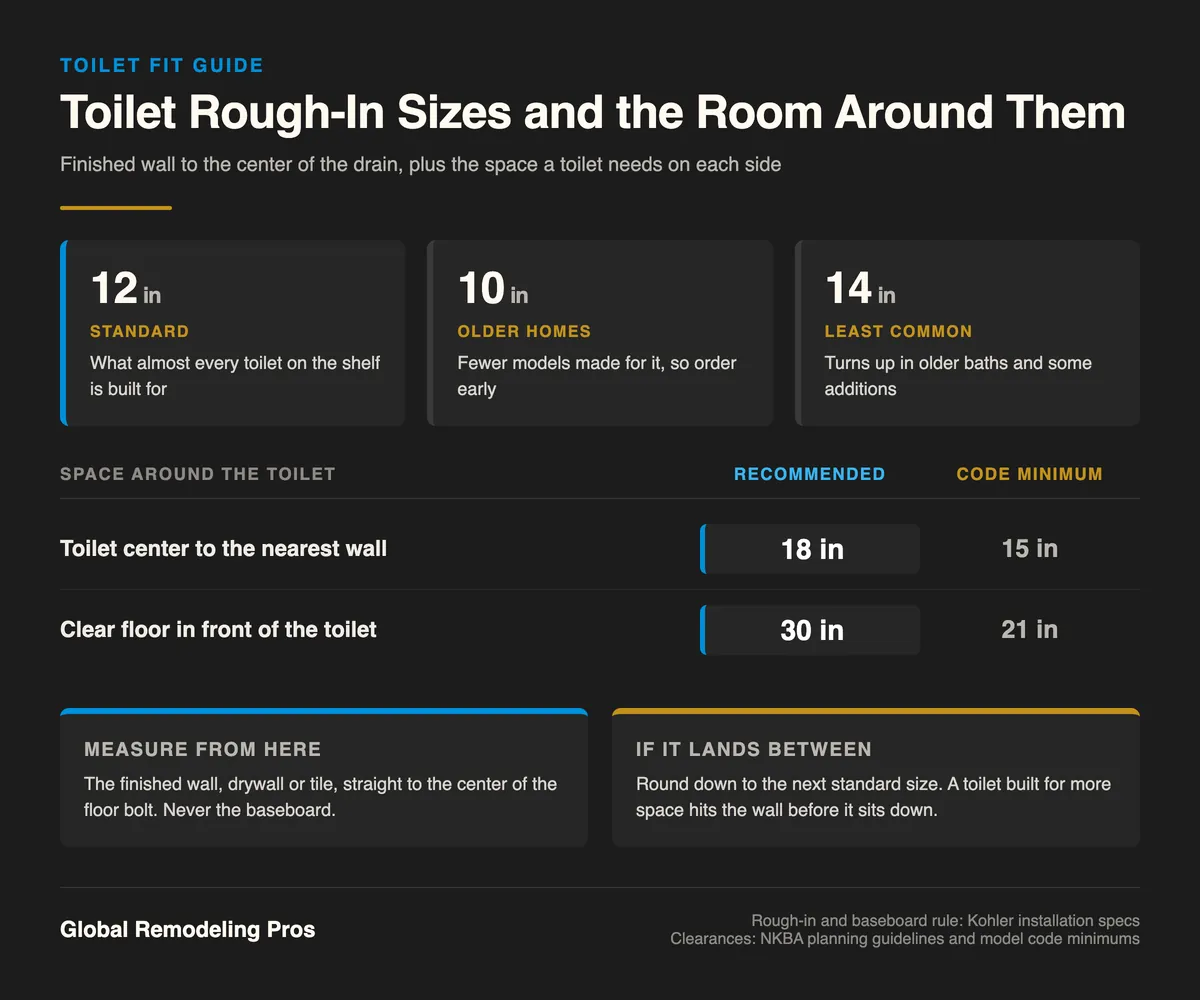
Twelve inches is the standard. Nearly every toilet on a store shelf is built for it, which is why most replacements drop straight in.
Ten and 14 inches turn up in older bathrooms. Both are real sizes you can buy for, but the choice of models is much smaller, so order early.
The size is a property of the room, not the toilet. You are not choosing it. You are finding out what you already have.
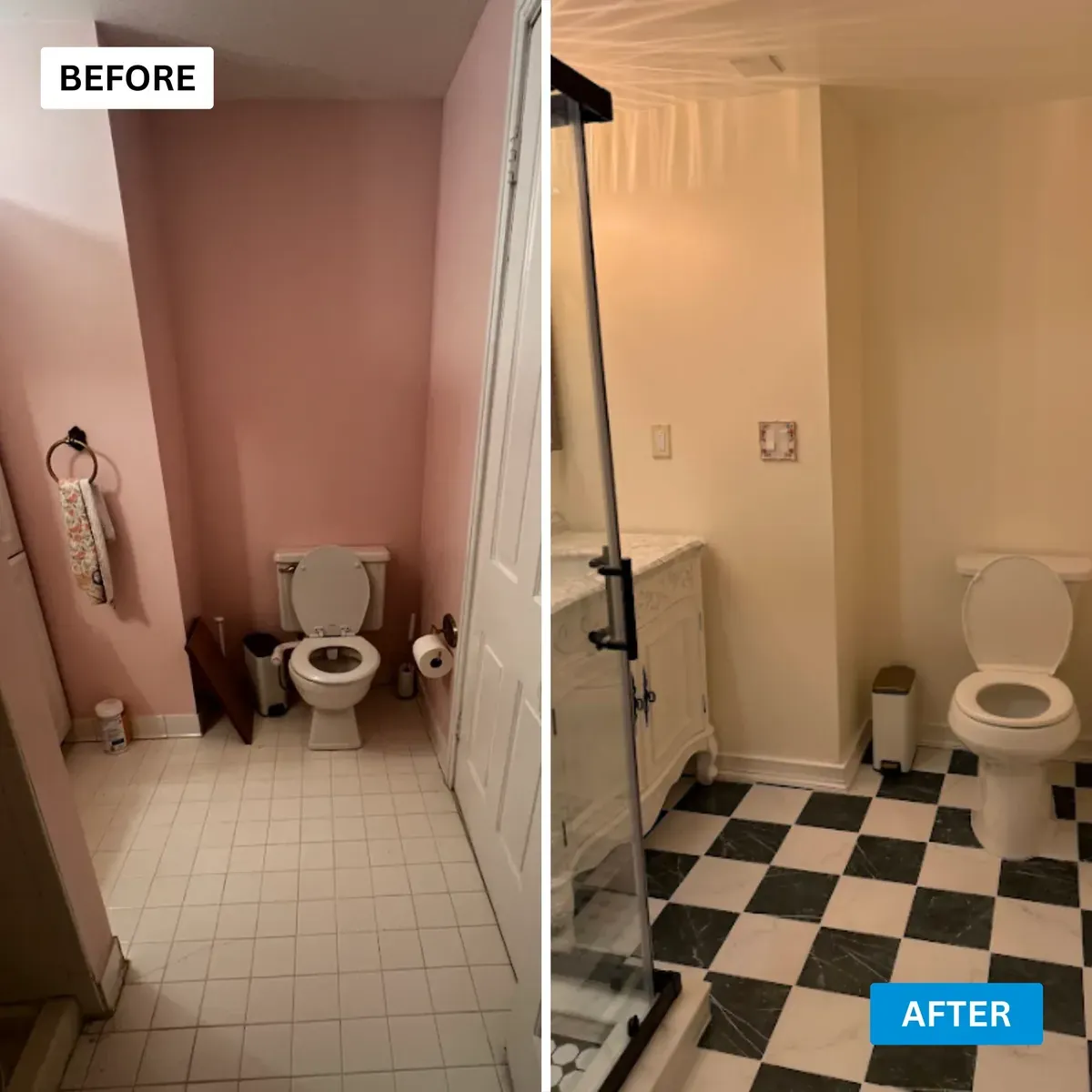
How Do You Measure a Toilet Rough-In?
Hook your tape on the finished wall. Read the number at the center of the bolt cap at the base of the toilet. That is it, and you do not have to pull the toilet out.
Measure from the wall, never the baseboard
This is the mistake that ruins the measurement. Kohler's installation instructions are blunt about it. The rough-in must be 12 inches or more from the base of the wall or baseboard, and if a baseboard causes the rough-in to be less than 12 inches, it must be cut or removed.
So take both numbers. Measure from the drywall or tile, then measure from the face of the baseboard. If the second number is under 12 inches, the trim has to go.
Measure to the center of the bolt, not the tank
The two bolt caps at the floor sit on the drain centerline. Measure to the middle of one of them. Never measure to the back of the tank or the edge of the bowl.
Round down if it lands in between
A reading of 11 inches means you shop for a 10 inch rough-in. A toilet built for more space will hit the wall before it sits down.
If you are tiling the wall behind the toilet, measure from where the new tile will finish. Half an inch of tile and mortar comes straight off the gap.
Check the room on each side too
The rough-in only tells you how far back the toilet sits. It says nothing about elbow room. The NKBA bathroom planning guidelines ask for 18 inches from the center of the toilet to the nearest wall, where code allows 15. In front they ask for 30 inches of clear floor, where code allows 21.
Why Older Bathrooms Throw the Measurement Off
Because the bathroom was built before 12 inches became the default. Decades of trim, tile and patching have also moved the finished wall forward.
The age of the toilet is a clue. The EPA notes that tank-type toilets installed in 1994 or later typically use 1.6 gallons per flush. Older ones typically use 3.5 or 5 gallons. If the flush volume is stamped high, the bathroom is old enough to hold a surprise.
What we find on these jobs
Global Remodeling Pros has been family run since 2017, when Jerson and Frank Cobena started it as a father and son team. Our crews carry nearly 30 years of combined experience and more than 5,000 projects around Baltimore and the DMV.
On a fixture job we measure the rough-in, the bowl length and the open floor before a single item is ordered. Customers send us the model they picked and we check it against the room first.
The other surprises show up once the old toilet is lifted out. A cracked flange or a soft spot in the subfloor has to be fixed before the new toilet goes down. Both are easier to price when they are found early.
Moving the drain is a different job
A swap uses the pipe already in the floor. Shifting the toilet means opening the floor and moving the drain line, and in Anne Arundel County that is permit work. Rules vary by county, so check yours before the floor comes up.
What If the Toilet You Want Does Not Match?
You have three ways out, and they are not close in price or effort. Work down the list in order.
Buy for the gap you have
This is the right answer almost every time. Both 10 and 14 inch models are made by the major brands. Filtering by rough-in is a standard option when you shop.
The trade is choice, not quality. Fewer styles come in the odd sizes, and they are more often special order than in stock.
Use an offset flange
An offset flange shifts the bowl an inch or two without touching the drain line. It is a fair fix for a small miss. It also narrows the path out of the toilet, so treat it as a workaround rather than a plan.
Move the drain
Only when the layout truly demands it. The floor comes up, the line moves, and you are into real plumbing work. Our guide to the cost of moving plumbing in a bathroom remodel covers what that adds. Whether you need a permit to remodel a bathroom usually turns on this exact question.
Once the size is settled, the rest is budget and fit. The cost to install a toilet covers the unit and the labor. If you are measuring the whole room anyway, the size a walk-in shower needs to be is the other number to know first.
Toilet Rough-In Questions
Can I put a 12 inch toilet on a 10 inch rough-in?
No. The tank hits the wall before the bolts reach the flange, so the toilet never sits down. Buy a toilet made for a 10 inch rough-in instead. A 10 inch toilet does fit a 12 inch rough-in, but it leaves a two inch gap behind the tank.
Do you measure a toilet rough-in from the wall or the baseboard?
From the finished wall, meaning the drywall or tile. Measure from the baseboard as well, because the toilet base has to clear it. If the trim leaves you less than the rough-in size, the trim gets cut or removed.
Can I measure the rough-in without removing the toilet?
Yes, and that is how we do it on the first visit to a Pasadena or Arnold bathroom. Measure from the wall to the center of either bolt cap at the base of the toilet. The caps sit over the drain centerline, so the reading is the same as measuring the bare flange.
Get the Measurement Checked Before You Buy
Global Remodeling Pros is a family run, MHIC licensed remodeler serving Baltimore and the wider DMV. Our labor is guaranteed for life. Send a photo of your toilet and the model you are looking at. We will confirm the fit and send a written bathroom remodeling proposal within 24 hours.
Call 443-623-5126