


The Short Answer, and the Line That Decides It
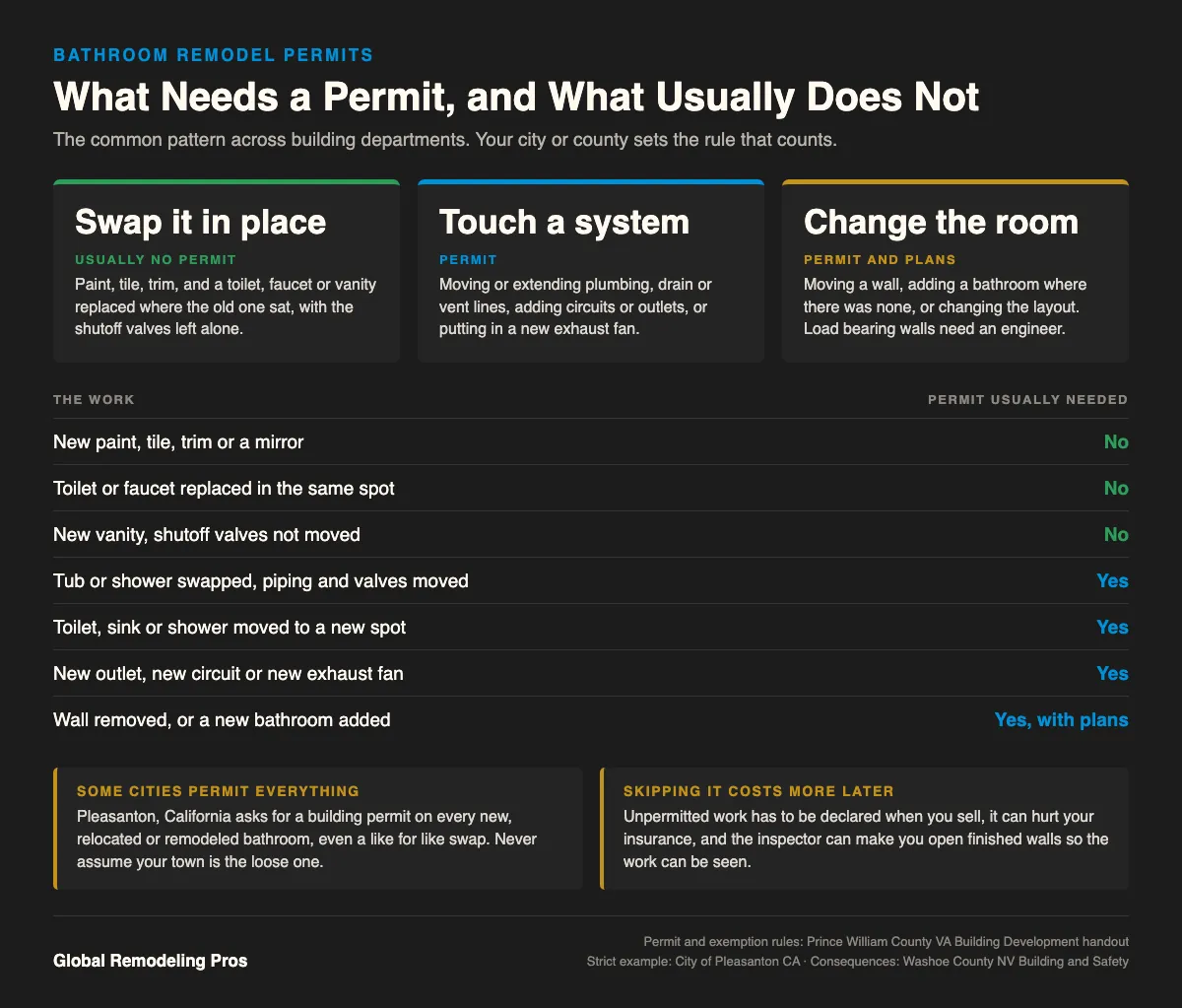
Sometimes. If you are swapping a toilet, a faucet or a vanity into the same spot, most building departments do not want a permit. The moment you move plumbing, add a circuit or change the layout, you need one.
Below is where that line usually falls. You will also see what it costs to skip a permit, and why the only answer that counts comes from your own county. Rules change from one town to the next. Treat this as the pattern and your building department as the ruling. If you are planning a full bathroom remodel, settle the permit question before anyone orders materials.
What Bathroom Work Needs a Permit?
Anything that changes a system or a wall. Plumbing, wiring and framing are the three triggers, and almost every permit question comes back to one of them.
Moving or extending plumbing
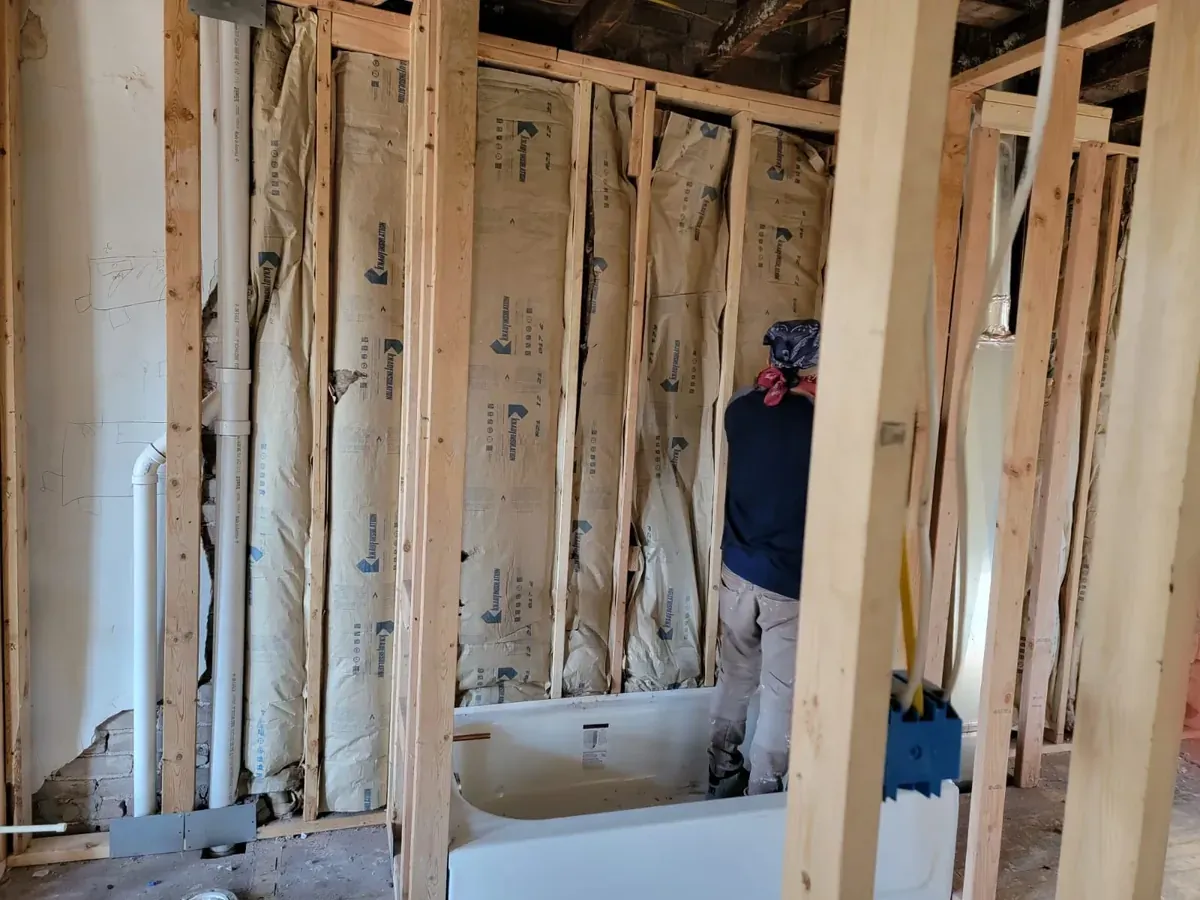
Shifting a toilet, a sink or a shower drain means new pipe, and new pipe gets inspected. The Prince William County, Virginia building handout puts it plainly: modification or extension of any existing plumbing or electrical system requires a permit. A tub or shower swap only needs one if the fixture, the piping or the valves move.
Adding or changing electrical
A new outlet, a new circuit, a relocated light or a heated floor all need an electrical permit. Bathroom outlets have to be on a protected circuit, and an inspector checks that before the drywall closes.
A new exhaust fan
Putting in a fan where there was none means new wiring and a new duct to the outside, so it is permit work. The sizing and venting rules are their own subject, covered in our guide to bathroom exhaust fan code requirements.
Moving a wall or adding a bathroom
This is the biggest one. Taking out a wall, stealing space from a closet, or putting a bathroom where there never was one needs a building permit and usually a drawing. If the wall holds weight, an engineer has to sign off on how the load gets carried.
Most full remodels need two or three permits at once. A building permit covers the room. Plumbing, electrical and mechanical get their own trade permits.
What Can You Do Without a Permit?
Work that stays on the surface, and fixtures that go back exactly where the old ones were. That is the general rule almost everywhere, with one large catch at the end.
The usual free list
Paint, tile, trim and a new mirror are finishes, not systems. The same Prince William County handout says that where only fixtures such as a toilet or faucet are being replaced in their original positions, or a new vanity goes in without moving the shutoff valves, no permit is required.
That covers a lot of what people call a remodel. New floor tile, a new vanity top, a new toilet, fresh paint and new lights on the existing wiring can all happen without a trip to the county.
The catch: some cities permit everything
Do not assume your town follows the loose version. Pleasanton, California tells homeowners that a building permit is required for all new, relocated, or remodeled bathrooms, including like for like work with no layout change. Two towns an hour apart can run opposite rules.
A permit can pull in other upgrades
Once a permit is open, some jurisdictions make you bring the rest of the house up to current standards. Pleasanton requires every non-compliant plumbing fixture in the home to be swapped for a water-efficient one. It is a small cost, but it surprises people.
One phone call to your building department settles all of this in about five minutes. Ask them the scope of your job, not the general question.
What Older Bathrooms Add to the Permit List
An older house brings a second set of rules that has nothing to do with the building permit. Lead paint is the main one, and it catches almost everyone off guard.
The lead rule on pre-1978 homes
If the house was built before 1978, the contractor disturbing painted surfaces has to be certified. The EPA Renovation, Repair and Painting program requires anyone paid to perform work that disturbs painted surfaces in homes built before 1978 to be a certified firm using lead-safe work practices. Global Remodeling Pros is Lead-Safe Certified and MHIC licensed, number 164107.
What we find when the walls come off
Global Remodeling Pros has been family run since 2017, when Jerson and Frank Cobena started it as a father and son painting service. We have completed more than 5,000 projects across Baltimore and the wider DMV. That work includes government buildings and diplomatic embassies in Washington, D.C., where the inspection standard is as strict as it gets.
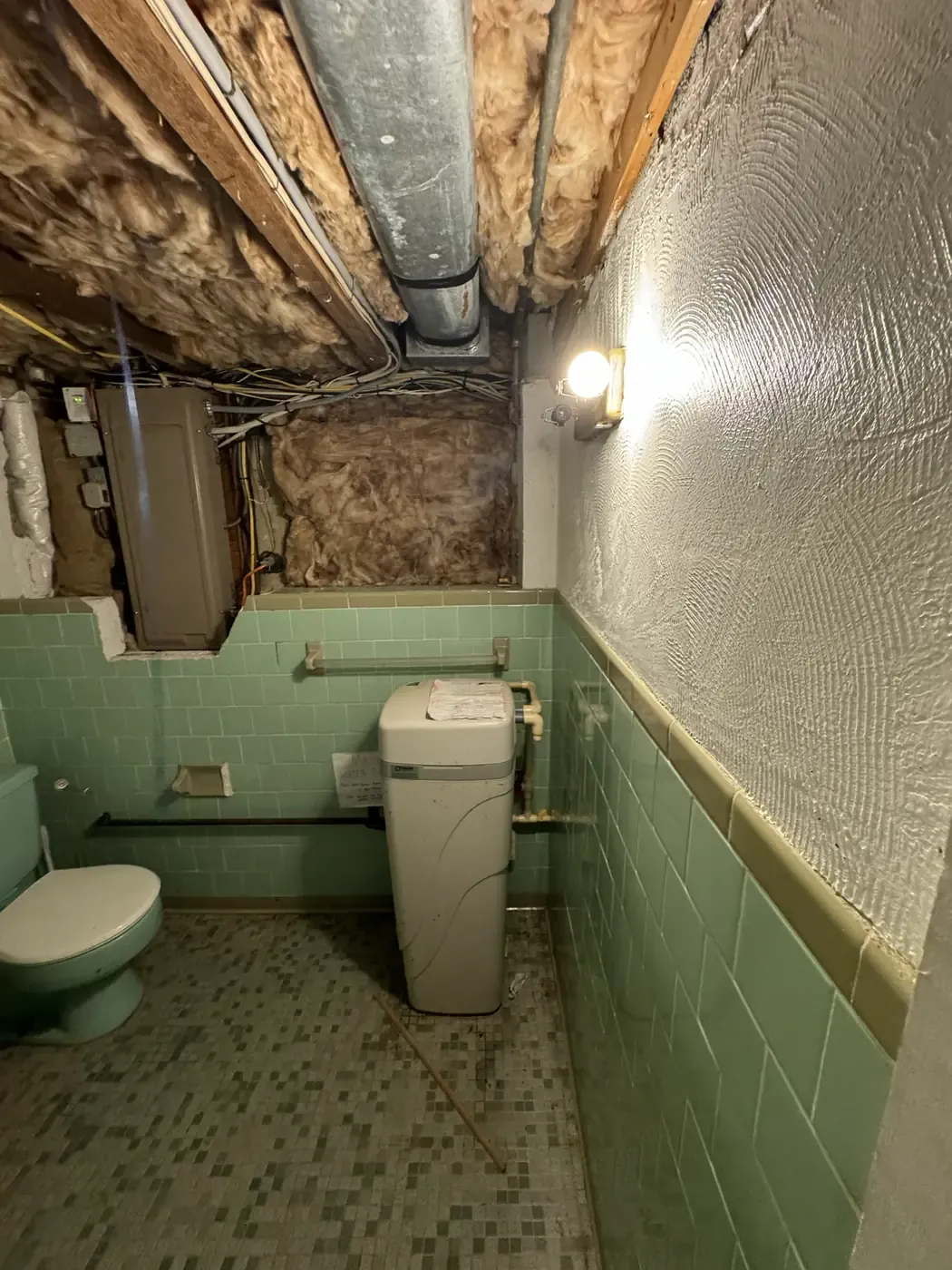
In the older bathrooms we open in Pasadena, Arnold and Gambrills, the old drain is often undersized or run in cast iron. Replacing it is not optional once it is exposed, and that turns a same-spot fixture swap into permit work.
Three Maryland counties, three permit desks
We pull permits in Anne Arundel, Howard and Montgomery counties, and they do not all want the same paperwork. So we price the permit into the proposal instead of guessing at it. We never quote a job on the hope that no permit is needed.
The useful habit is simple. Call the permit office with your scope before the design is final, because the answer can change what the design should be.
Who Pulls the Permit, and What Happens If Nobody Does
Your contractor should pull it, in their name, before the first day of work. Ask to see it. A licensed remodeler who will not put their name on a permit is telling you something.
You can pull your own, with one trade-off
Most jurisdictions let a homeowner pull a permit on their own house. You then become the responsible party for the work and the inspections, which is fine on a small job and heavy on a big one.
What skipping it actually costs
It follows the house. Washoe County, Nevada warns that work done without required permits is in violation of the building code. It has to be declared when you sell and it can affect your insurability. It may also have to be opened back up, or certified by a licensed professional, before the county will approve it.
Opening a finished wall so an inspector can see a pipe is the expensive part. You pay twice for the same tile.
Build the permit into the plan, not the panic
Permit review adds days, not months, on a normal bathroom. If you are adding a bathroom to the house rather than redoing one, expect a longer review and a drawing. Sizing a new shower is the other thing to settle early, since the minimum walk-in shower size is written into the same code the inspector reads.
If your layout is changing, price the plumbing move first. Our guide to the cost to move plumbing in a bathroom remodel covers the number that usually decides whether the layout change is worth it.
Bathroom Remodel Permit Questions
Can you remodel a bathroom yourself without a permit?
You can do the cosmetic part without one. Paint, tile, trim and same-spot fixture swaps are exempt in most places. The moment you move a drain, add a circuit or take out a wall, you need a permit even if you are doing the work yourself.
How long does it take to get a bathroom remodel permit?
A simple trade permit is often issued in about one to three weeks. A remodel that needs plans reviewed takes longer, sometimes a month or more. In Anne Arundel County we apply as soon as the scope is set so the review runs while materials are on order.
What happens if you remodel a bathroom without a permit?
The work is treated as a code violation. You can be charged a penalty fee and made to apply after the fact. You may also be told to open finished walls, or to hire a licensed professional to certify what is behind them. It also has to be disclosed when you sell the house.
Tell Us the Scope, We Will Tell You the Permits
Global Remodeling Pros is a family run, MHIC licensed and Lead-Safe Certified remodeler serving Baltimore, Pasadena and the wider DMV, and our labor is guaranteed for life. Send us what you want changed and we will tell you which permits your county wants and what they add to the job. Written bathroom remodeling proposals go out within 24 hours.
Call 443-623-5126